NEWS
Ductile iron pipes undergo anti-corrosion treatment to extend their service life, ensure water quality safety, adapt to complex environments, and reduce maintenance costs. In response to the anti-corrosion requirements for ductile iron pipes, the following is an overview of some common anti-corrosion methods.
1.Internal Anti-Corruption
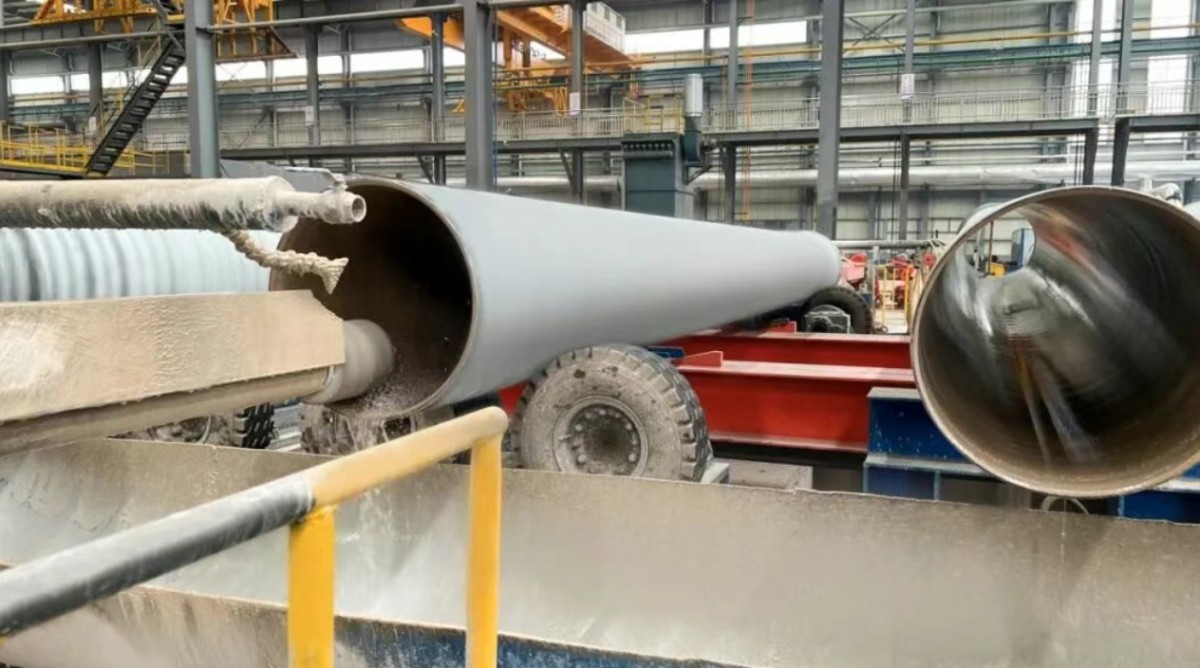
1) Cement Mortar Lining
Principle: Cement mortar mixed in a specific ratio is poured into the cast iron pipe. Centrifugal force generated by high-speed rotation causes the mortar to spread evenly and adhere firmly to the inner wall of the pipe. This creates a barrier between the water and the pipe, preventing corrosion of the pipe and contamination of the conveyed water.
Process: Centrifugal lining.
Requirements: The cement lining must be uniform, free of delamination or spalling, to ensure optimal corrosion protection.
2. External anti-corrosion
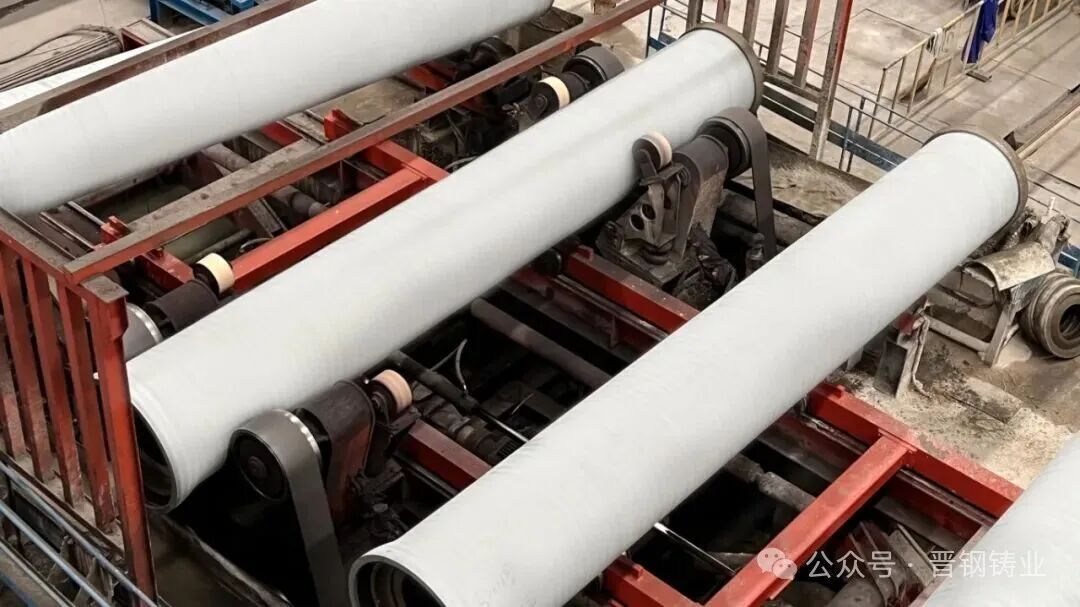
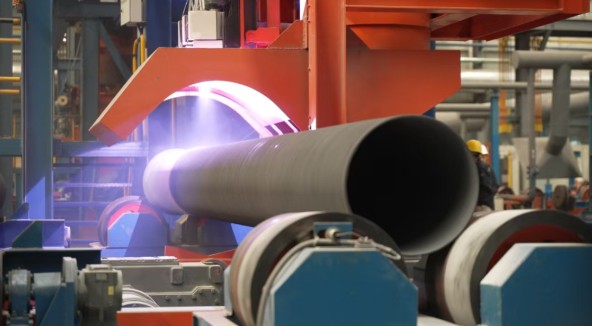
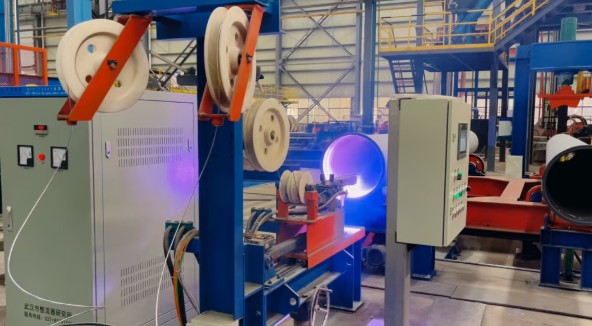
1)Zinc Spraying on Pipe Body + Zinc Spraying on Socket
Principle: Taking advantage of zinc’s lower electrochemical potential compared to iron, the zinc layer protects ductile iron pipes from corrosion by reacting first—that is, zinc corrodes before iron does. Additionally, when the zinc layer is corroded by salt solutions, it forms insoluble compounds that coat the pipe’s outer surface, thereby slowing the corrosion rate.
Process: The pipe body is coated with a metallic zinc layer using arc spraying, while the socket is coated using thermal spraying.
Requirements: The zinc coating must cover the entire outer surface of the cast iron pipe, with no defects such as exposed spots or poor adhesion. The zinc coating must comply with national standards.
2)Spray Coating of the Pipe Body
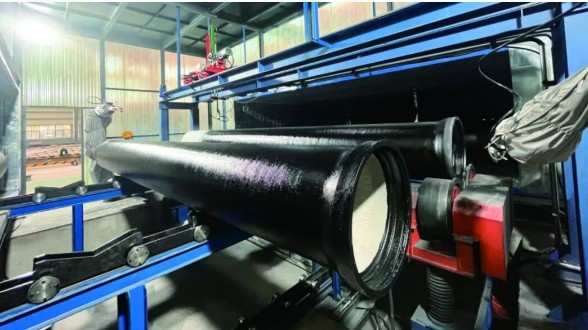
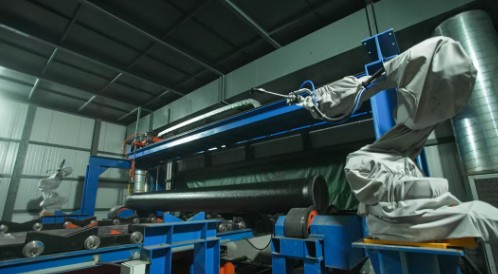
Principle: A layer of low-toxicity, water-resistant, acid-resistant, and low-pollution epoxy paint is sprayed onto the outer surface of the cast iron pipe to isolate it from the external environment, thereby achieving corrosion protection.
Process: Automatic rotary spray coating.
Requirements: The paint film thickness is generally 70 microns, and the paint must adhere firmly to the outer surface of the cast iron pipe.